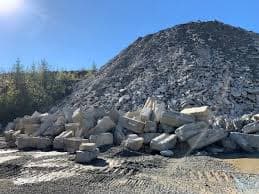
The $186 Million Alcoa Highway Project - What It Means for East TN Concrete Recycling
The $186 million Alcoa Highway widening is the biggest piece of infrastructure work in East Tennessee in years. It's reshaping the corridor that connects Alcoa to Knoxville, improving traffic flow, and - from a construction standpoint - generating one of the largest concrete waste streams the region has ever seen.
That's actually good news for contractors and project managers dealing with concrete disposal. The sheer volume of material coming off this project is creating a real opportunity for local concrete recycling.
What's happening, why it matters if you're anywhere near the project, and how Smoky Mountain Sand & Gravel supports TDOT contractors on the concrete logistics.
What's Happening on the Alcoa Highway
The Alcoa Highway (US 321) widening is a TDOT project spanning multiple phases across Blount County and into Knox County. One of the state's priority infrastructure investments.
Project scope:
- Widening and reconstruction of US 321 between Alcoa and Knoxville
- Estimated cost: $186 million
- Timeline: Multiple years (phase 1 underway, additional phases planned)
- Focus areas: Alcoa, Maryville, south to Sevier County, north to Knoxville connections
What that means on the ground:
- Existing roadway is being demolished to make way for widened lanes
- Old pavement, concrete shoulders, median barriers, and curbing are being removed
- Structural improvements, new drainage, and utility work require extensive excavation
- Replacement with new concrete and asphalt surfaces
The Concrete Volume Problem
Widen a major highway corridor across 20+ miles and the quantity of concrete being demolished gets staggering.
Rough estimate for this type of project:
- Road surface (asphalt and concrete): 15,000-20,000 tons
- Curbs, barriers, medians: 2,000-4,000 tons
- Utility structures, small structures: 1,000-2,000 tons
- Total concrete volume: 18,000-26,000 tons
For comparison, the Blount County Landfill handles roughly 1,000-1,500 tons of C&D waste per month. This single project generates months of landfill capacity in concrete alone.
TDOT contractors were facing two disposal paths:
- Haul everything 2-3+ hours away to recycling facilities near Nashville or Knoxville (Walsh Recycling in Goodlettsville is the nearest current option), burning fuel and labor
- Use local landfill, paying $60/ton tipping fees and dealing with capacity constraints
Neither was ideal, and both drove up project costs.
TDOT Specifications & Sustainability Requirements
TDOT has clear environmental and economic preferences for highway projects:
- Recycled material specification: TDOT encourages (and increasingly requires) recycled aggregate in base courses, sub-base, and fill
- Cost control: Projects using locally sourced recycled material save transportation costs and meet budget targets
- Environmental compliance: TDEC and TDOT both prioritize waste diversion from landfills
What that means: TDOT contractors aren't just looking for a place to haul concrete. They need a local recycler who can:
- Process high volumes quickly
- Provide material that meets TDOT specifications
- Generate documentation for sustainability and compliance
- Work on contractor timelines (sometimes material back in days, not weeks)
Why Local Recycling Changes the Economics
For the Alcoa Highway project specifically, having a dedicated concrete recycler in Blount County - instead of hauling to Goodlettsville (180+ miles round trip) or landfilling everything - changes the math fundamentally.
Haul scenario comparison for 5,000 tons:
Option A: Landfill (Blount County)
- Tipping fee: 5,000 tons × $60 = $300,000
- Haul-off (200 loads × 25 tons): 400 hours of truck time, ~$25,000-30,000 labor/fuel
- Total: $325,000-330,000
- Material value: $0
Option B: Goodlettsville Recycling (180 miles round trip)
- Tipping fee: 5,000 tons × $20-25 = $100,000-125,000
- Haul-off (200 loads × 25 tons): 180-mile average distance, 50 hours/load × fuel/labor = $60,000-80,000
- Coordination delays (traffic, distance, scheduling): $10,000-20,000
- Total: $170,000-225,000
- Material value: $0 (unless contractor uses it, unlikely in Nashville area)
Option C: Local Recycling (Blount County, SMSG)
- Tipping fee or material credit: $100,000-150,000 (or $0 if using recycled material on-site)
- Haul-off (200 loads × 25 tons): 15-30 minutes drive, minimal fuel/coordination overhead = $15,000-20,000
- Processing into usable material for next phase: included
- Total: $115,000-170,000
- Material value: 3,000-4,000 tons of RCA usable for project sub-base and fill = $60,000-100,000 value
Option C advantage: $55,000-165,000 per 5,000 tons vs. other options.
At Alcoa Highway project scale (18,000-26,000 tons), that's $200,000-600,000+ in total project savings just from concrete disposal efficiency.
SMSG's Role Supporting TDOT Contractors
SMSG is the only dedicated concrete recycling facility in all of East Tennessee. For the Alcoa Highway project, that means:
Capacity. We're equipped to handle the volumes TDOT contractors are generating. Need to move 500 tons in a week? We've got the equipment and processing capability.
TDOT specification compliance. We produce recycled concrete aggregate that meets Tennessee specs for road base, sub-base, and fill. Testing documentation and material certifications included.
Local coordination. Contractors working the Alcoa Highway project aren't dealing with distant facilities in Nashville or Knoxville. They're coordinating with a local operator who understands the job, the timeline, and the constraints.
Material feedback. Recycled aggregate from Alcoa Highway concrete can go back into sub-base for the widened roadway itself, or into other TDOT projects in the region. That circularity cuts material sourcing costs for later phases.
Schedule flexibility. TDOT projects operate on tight timelines. Equipment breaks down, phases shift, weather delays happen. A local recycler gives you schedule flexibility national companies can't.
Environmental & Regulatory Credit
The Alcoa Highway project is a high-visibility TDOT initiative. Local concrete recycling instead of landfill or long-haul creates measurable environmental benefits TDOT tracks and reports:
- Landfill diversion: 18,000-26,000 tons of concrete kept out of landfill capacity
- Transportation emissions reduction: Avoiding 180-mile hauls to Goodlettsville saves roughly 36,000-52,000 gallon-equivalents in fuel per 5,000 tons
- Local economic benefit: Material processing stays in East Tennessee, supporting local jobs and infrastructure
For TDOT's sustainability reporting and state environmental goals, that matters.
Impact on Other East Tennessee Construction
The Alcoa Highway project isn't just a TDOT job - it's creating a local model for concrete recycling that contractors across the region are picking up.
When contractors see TDOT successfully using local recycled concrete for highway widening, they apply the same logic to their own projects:
- Commercial developments (Pellissippi Parkway bridge work, SpringBrook Farm development)
- Industrial expansion (DENSO expansion, Amazon warehouse site prep)
- Municipal and county projects
Each of these projects generates concrete and needs disposal/material solutions. The Alcoa Highway project demonstrates that local recycling works.
What This Means for Blount County & Maryville
The Alcoa Highway widening is reshaping the region. It improves traffic flow, supports economic development, and creates demand for local services like concrete recycling.
For Blount County contractors, that demand means:
- Competitive advantage: Using local recycling demonstrates cost control and efficiency
- Material sourcing: Recycled concrete available locally cuts your material procurement costs
- Environmental positioning: Using recycled material supports your own project sustainability claims
For property owners and smaller contractors, concrete disposal is now genuinely competitive and local - not a 3-hour haul.
Wrapping Up
The $186 million Alcoa Highway project is generating unprecedented concrete disposal volume in East Tennessee. Instead of shipping it away or filling landfill capacity, local recycling at SMSG is supporting TDOT contractors, reducing project costs, and creating a usable material supply for the region.
Managing concrete disposal on any East Tennessee project - big or small - you now have a local, cost-effective alternative to landfill or long-haul recycling.
Contact us at (865) 999-0857 to discuss your project's concrete recycling needs.
Ready to get started?
Serving Blount County, Knox County, and the greater East Tennessee region. Mon-Fri 7am-5pm, Saturday 8am-12pm.