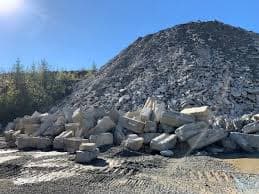
Best Backfill for Drainage Behind a Retaining Wall (2026 Guide)
TL;DR: The best backfill for a retaining wall is a 12-18" curtain of clean #57 crushed stone or RCA against the back face, wrapped in non-woven filter fabric, with a 4" perforated drain pipe at the base sloped to a daylight outlet. Never use native clay, pea gravel, or crusher run against the wall face.
A retaining wall is only as strong as the material packed behind it. Wrong backfill and water builds up, freezes, and pushes the wall over in a season or two. Right backfill and the wall stands straight for decades with almost no maintenance.
This guide helps you pick the right material for every zone behind your wall.
Why Backfill Choice Makes or Breaks the Wall
Behind every retaining wall is a pressure fight. Soil pushes on the wall from behind. Water in that soil makes it heavier and, when it freezes, expands and multiplies the force.
Three things wreck retaining walls:
- Hydrostatic pressure: trapped water behind the wall can add hundreds of pounds per square foot of lateral load
- Frost heave: saturated soil freezes, expands, and shoves the wall forward
- Poor drainage: clay and native fill hold water instead of releasing it
Good backfill solves all three by letting water fall straight down to a drain pipe and out. The wall stays dry, light, and stable.
The Three Zones Behind a Retaining Wall
Think of the space behind your wall in three layers, from wall face going back:
Zone 1: Drainage Zone (12-18" thick, right against the wall)
Clean angular crushed stone. No fines. This is the "chimney" that carries water down to the drain pipe.
Zone 2: Structural Fill (behind the drainage zone)
Compactable material that supports the load without holding water. Crusher run or dense-grade works.
Zone 3: Topsoil Cap (top 4-6")
Loam or topsoil for grass and landscaping. Sloped away from the wall so surface water sheds off.
Skip Zone 1 and the wall traps water. Skip Zone 2 and the slope behind the wall settles. Skip the cap slope and rainwater dumps straight into the drainage zone every storm.
Best Materials for the Drainage Zone
Option 1: #57 Clean Crushed Stone (Recommended)
Specs:
- Size: 3/4" to 1" diameter
- Shape: Angular (crushed)
- Fines: None (washed)
Pros:
- Excellent void space for water flow
- Angular shape locks in place, resists settling
- Widely available
- Works with any wall type: segmental block, timber, poured concrete
Cons:
- More expensive than crusher run
- Needs filter fabric to keep soil out
Best for: Standard drainage zones behind block, timber, or concrete walls up to 6 feet tall.
Option 2: #67 Crushed Stone
Specs:
- Size: 3/4" down to about 1/4"
- Shape: Angular
- Fines: Very minimal
Pros:
- Slightly better for compaction near the wall base
- Still drains well
- Common in engineered wall specs
Cons:
- Small amount of fines can slow drainage over time if fabric fails
- Less void space than #57
Best for: Engineered segmental block walls where manufacturer specs call for #67.
Option 3: Recycled Concrete Aggregate (RCA)
Specs:
- Size: 3/4" to 1" screened
- Shape: Very angular
- Fines: Minimal when specified clean
Pros:
- Usually more economical than virgin crushed stone
- Very angular, excellent interlock
- Performs identically to virgin stone for drainage
- Environmentally friendly (diverts concrete from landfills)
Cons:
- Mixed color appearance
- Availability varies by region
Best for: Budget-conscious builds, residential walls, DIY projects where you want the same drainage performance for less money.
Best Materials for the Structural Fill Zone
Crusher Run (Dense Grade)
Specs:
- Size: 3/4" down to fines
- Shape: Angular with dust
- Compaction: Excellent
Pros:
- Compacts into a firm, stable mass
- Supports load behind the drainage zone
- Inexpensive per ton
Cons:
- Holds water. NEVER use this against the wall face
- Must sit behind the drainage curtain, not in it
Best for: The structural fill zone behind the drainage stone, lifted in 6-8" compacted lifts.
What NOT to Use
Native clay soil against the wall
- Holds water like a sponge
- Freezes and heaves
- Guaranteed wall failure over time
River rock or pea gravel in the drainage zone
- Rounded shapes roll and settle
- Void space collapses under load
- Looks nice, drains poorly under pressure
Sand alone
- Fine particles fill voids
- Turns into a saturated slurry when wet
- No structural support
Crusher run against the wall face
- Fines clog and hold water
- Defeats the entire drainage system
The Perforated Drain Pipe
At the base of the drainage zone, running the full length of the wall, install a 4" perforated drain pipe (holes facing down).
- Bed the pipe on 2-3" of clean stone
- Slope the pipe at 1% (1" drop per 8 feet) toward a daylight outlet or drywell
- Wrap the drainage stone in non-woven geotextile filter fabric so soil doesn't migrate in and clog the voids
- Provide a clean outlet. Never leave the pipe blind-ended in the fill
Without the pipe and an outlet, the drainage stone eventually saturates and stops working.
How Much Material Do You Need?
For the drainage zone specifically, you're building a vertical curtain of stone along the back of the wall.
Formula:
(Wall Length × Wall Height × Curtain Thickness in feet) ÷ 27 = Cubic Yards Cubic Yards × 1.4 = Tons
Curtain thickness is typically 1 foot (12") for residential walls or 1.5 feet (18") for taller or engineered walls.
Quick Estimate Table: Drainage Zone Only
| Wall (L × H) | 12" Curtain | 18" Curtain |
|---|---|---|
| 20 ft × 3 ft | 2.2 cy / 3.1 tons | 3.3 cy / 4.6 tons |
| 40 ft × 4 ft | 5.9 cy / 8.3 tons | 8.9 cy / 12.5 tons |
| 60 ft × 5 ft | 11.1 cy / 15.5 tons | 16.7 cy / 23.4 tons |
Add 10% for compaction loss and overfill. Structural fill behind the curtain is estimated separately based on the full backfill volume.
Cost Comparison
| Material | Relative Cost | Zone |
|---|---|---|
| #57 clean crushed stone (virgin) | Higher | Drainage |
| #67 crushed stone (virgin) | Higher | Drainage |
| RCA #57 (recycled) | Usually lower than virgin | Drainage |
| Crusher run (virgin or RCA) | Lowest per ton | Structural fill |
Final cost depends on your quantity, distance, and the supplier. Delivery is separate. For current RCA pricing and delivery from SMSG, call (865) 999-0857. Need help with tonnage? See our tons vs cubic yards guide.
Common Mistakes
- No drainage zone at all: dumping native soil straight against the wall. The most common cause of failure.
- No filter fabric: soil migrates into the stone, fines clog the voids, drainage stops working.
- Pea gravel or river rock in the drainage zone: rounded stone won't hold its shape under pressure.
- No drain pipe outlet: pipe collects water but has nowhere to send it.
- No weep holes on segmental block or masonry walls: water can't exit at the base.
- Missing surface slope: the topsoil cap dumps rainwater right into the drainage zone.
- Compacting the drainage stone too aggressively: you'll break down the angular shape and lose void space.
#57 vs #67 and Crushed Concrete Strength
#57 is 3/4" to 1" with almost no small material. #67 runs 3/4" down to about 1/4" with a bit more variety. Both drain well. #57 gives you the most void space; #67 compacts slightly better where a firmer base is needed. Some engineered segmental walls call for a specific gradation, so check your block manufacturer's spec sheet.
Crushed concrete is plenty strong for backfill. Clean RCA matches virgin crushed stone for angularity, drainage, and load-bearing behind residential walls, and it's used routinely on commercial and DOT projects. For wall-specific sizing, see our RCA for retaining walls sizing guide. For the drainage details, see drainage behind retaining walls.
What To Use
For most retaining walls, a 12-18" curtain of clean #57 stone or RCA against the back face, a perforated drain pipe at the base, filter fabric wrapping the whole drainage zone, crusher run behind that for structural fill, and a sloped topsoil cap on top. That's the recipe that stands for 30 years.
Spend the money on the drainage zone. The wall doesn't fail because you saved on structural fill. It fails because water got trapped against the back.
Related guides
- Best Aggregate for French Drains: Complete Selection Guide: Same drainage-stone logic applied to a horizontal drain trench.
- Understanding Aggregate Sizes: #57, #2, Crusher Run & More Explained: Decodes the numbers so you can order the right size for the drainage zone or structural fill.
- What Is Recycled Concrete Aggregate (RCA)? The Complete Guide for Contractors and Homeowners: Why RCA is a legitimate substitute for virgin #57 behind a wall.
Need backfill stone for a retaining wall project? Smoky Mountain Sand & Gravel sells RCA #57 for the drainage zone and RCA crusher run (3/4" minus with fines) for structural fill throughout Blount County, Maryville, Alcoa, and surrounding East Tennessee communities. Our RCA is a strong, angular substitute for virgin stone, and we don't sell virgin stone. See our aggregate for sale page, and call us at (865) 999-0857 for current pricing and delivery.
Keep Reading
- Foundation Backfill: What Goes Around Basement Walls
Frequently Asked Questions
What is the best backfill material for a retaining wall?
Clean angular crushed stone like #57 or clean 3/4 inch RCA against the wall face, in a 12 to 18 inch drainage curtain. Crusher run goes behind that as structural fill, never against the wall.
Can you use RCA behind a retaining wall?
Yes. Clean, angular RCA #57 drains as well as virgin #57 stone and is usually the more economical choice. Check your block manufacturer's spec sheet for engineered walls, but it's a straight swap for most residential builds.
Why can't you use crusher run against a retaining wall?
The fines in crusher run hold water against the wall, freeze, and multiply hydrostatic pressure until the wall pushes over. Crusher run belongs behind the drainage curtain as structural fill, not in the drainage zone.
Do you need filter fabric behind a retaining wall?
Yes. Wrap the drainage stone in non-woven geotextile fabric. Without it, soil migrates into the stone and clogs the voids within a few seasons, and the wall starts holding water again.
How thick should the drainage stone be behind a retaining wall?
12 inches minimum for standard residential walls up to 6 feet, 18 inches for taller or engineered walls. That gives you a continuous vertical chimney of stone from base to top.
How tall can I DIY a retaining wall before I need an engineer?
Most East Tennessee jurisdictions require an engineered design over 4 feet from footing to top of wall. Under 4 feet, most segmental block systems are homeowner-friendly if you follow the manufacturer's spec.
Related Guides
Ready to get started?
Serving Blount County, Knox County, and the greater East Tennessee region. Mon-Fri 7am-5pm, Saturday 8am-12pm.