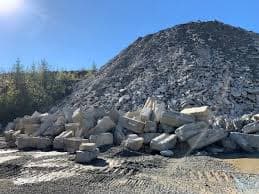
Best Gravel for a Shed Base: Crusher Run vs #57 vs RCA
TL;DR: Use compacted crusher run for a shed base, virgin limestone or recycled concrete (RCA). It locks into a hard, level pad. #57 drains well but stays loose, so use it only as a drainage layer under crusher run on wet sites. Skip pea gravel and river rock: round stone rolls and never locks up.
This post is about one decision: which gravel to put under your shed. If you've already picked the material and want the build steps, go to How to Build a Gravel Shed Pad: Step-by-Step.
Shed Base Gravel Compared
| Gravel | What it is | Compacts? | Drainage | Shed base verdict |
|---|---|---|---|---|
| Crusher run (limestone) | Angular stone, ~3/4" to 1.5" minus, fines included | Yes, very hard | Good (sheds water off the surface) | Best all-around choice |
| RCA crusher run | Crushed concrete, 3/4" minus, fines included | Yes, very hard, lightly self-cements | Good | Best value choice |
| #57 stone | Clean angular ~3/4" to 1", no fines | No, stays loose | Excellent (water drains straight through) | Drainage layer only |
| RCA #57 | Clean crushed concrete ~3/4" to 1" | No | Excellent | Drainage layer only |
| Pea gravel | Small round stone | No, rolls | Good | Avoid |
| River rock | Large round stone | No | Good | Avoid |
| Sand | Fine particles | Somewhat | Poor in clay, washes out | Avoid as a base |
| Fill dirt / bank run | Mixed soil and stone | Inconsistent | Poor | Avoid |
Crusher Run: The Standard
Crusher run goes by a lot of names: crush and run, dense-graded aggregate (DGA), 21A, base stone. The key is the fines. Stone dust fills the gaps between larger angular pieces, and when you compact it, the whole layer locks into something close to a soft slab.
Why it wins under a shed:
- Holds level under skid and block loads
- Screeds flat for a square, plumb building
- Sheds water off the surface when the pad is pitched slightly
- Easy to top up years later
Downside: water moves through it slower than clean stone. On well-drained ground that doesn't matter. On wet clay, add a drainage layer (see below).
RCA Crusher Run: Same Job, Usually Less Money
RCA crusher run is recycled concrete crushed to 3/4" minus with the fines left in. Under a shed it performs like limestone crusher run, and often packs harder because leftover cement in the old concrete lightly binds the layer over time.
- Pros: compacts hard, very angular, generally costs less than virgin stone, made locally from recycled concrete
- Cons: grayer color with occasional brick or tile flecks, which nobody sees once the shed is on it
We sell RCA crusher run and RCA #57 at our Maryville yard. More on the material in What Is RCA Gravel?.
#57 Stone: Great Drainage, Bad Surface
#57 is clean, angular stone around 3/4" to 1" with no fines. Water pours straight through it. That's its strength and its weakness: with nothing filling the voids, it never locks into a solid surface. Skids and blocks can rock and settle as the stones shift.
Where #57 earns its spot: as the bottom layer on wet or clay sites, 2 to 3 inches of #57 under compacted crusher run. Water drains out of the pad while the shed sits on a firm surface.
For more on this pair, see crusher run vs #57. The same logic applies under a shed as under a driveway.
Pea Gravel and River Rock: Skip Them
Round stone acts like ball bearings. It looks nice around a shed, but under one it shifts every time weight moves, and the building goes out of level. If you want pea gravel for looks, use it as a decorative border outside the pad, not under the skids.
Best Gravel by Shed Size and Type
| Shed or building | Recommended base | Compacted depth |
|---|---|---|
| Small storage shed, 8x8 to 8x10 | Crusher run or RCA crusher run | 4 in |
| Standard shed, 10x12 to 12x16 | Crusher run or RCA crusher run | 4 in (6 in on soft soil) |
| Large prefab, 12x20 and up, or lofted barn | Crusher run or RCA crusher run | 6 in |
| Garage or workshop with vehicles | Crusher run or RCA crusher run, #57 drainage layer if wet | 6 to 8 in |
| Shed on blocks or piers | Crusher run under each block, or a full pad | 4 to 6 in |
| Chicken coop, kennel, small building | Crusher run | 4 in |
Best Gravel by Soil and Drainage
| Site condition | What to use |
|---|---|
| Firm, well-drained soil | Crusher run alone, 4 in |
| Red or gray clay (common in East TN) | Crusher run, 6 in; consider 2 to 3 in of #57 underneath |
| Low spot or standing water after rain | #57 drainage layer under crusher run, plus pitch or a drain to daylight |
| Sloped lot | Crusher run with a timber or block retaining edge on the low side |
| Sandy soil | Crusher run, 4 in; woven geotextile helps keep layers separate |
If water already pools where the shed is going, fix that first. Our standing water drainage guide covers the options.
Pad Basics (Short Version)
Whatever gravel you choose, the pad itself follows a few rules:
- Make the pad 1 ft bigger than the shed on every side (a 10x12 shed gets a 12x14 pad)
- Strip topsoil to firm subgrade before adding stone
- Frame the edges with timbers or block
- Compact in 3 to 4 inch lifts with a plate compactor
The full layout, excavation, framing, compaction, leveling steps, and tons-needed tables are in How to Build a Gravel Shed Pad. For a quick tonnage number, use our gravel calculator.
Our Pick
For nearly every backyard shed in East Tennessee: compacted RCA crusher run, 4 to 6 inches deep, with a #57 drainage layer underneath only if the site is wet. You get a hard, level base, and it generally costs less than virgin crusher run.
Pick up at 245 Brookdale Rd, Maryville or get it delivered (see trucking). Open Mon-Fri 7 AM to 5 PM and Saturday 8 AM to noon. Call (865) 999-0857 for current RCA and delivery pricing, or browse aggregate for sale.
Frequently Asked Questions
What is the best gravel for a shed base?
Compacted crusher run, either virgin stone or recycled concrete (RCA crusher run). The fines lock the stone into a hard, level surface that holds skids and blocks without settling.
Is #57 stone or crusher run better under a shed?
Crusher run for the main base, because it compacts tight and stays level. #57 drains better but stays loose, so use it as a lower drainage layer on wet sites rather than the surface the shed sits on.
Can I use crushed concrete (RCA) for a shed pad?
Yes. RCA crusher run compacts as hard as limestone crusher run, often harder, and generally costs less. The only trade-off is a grayer, less uniform look.
Is pea gravel good for a shed base?
No. Pea gravel is round, so it rolls under load and never locks up. Sheds on pea gravel settle and go out of level.
What gravel should I use under a shed on wet clay soil?
Go 6 inches deep, with a few inches of #57 at the bottom for drainage and compacted crusher run on top. Pitch the subgrade slightly so water can escape the pad.
Does a large shed or garage need different gravel?
Same material, more depth. Use compacted crusher run at 6 inches for big prefab buildings and 6 to 8 inches for garages or workshops that see vehicles.
Related Guides
Ready to get started?
Serving Blount County, Knox County, and the greater East Tennessee region. Mon-Fri 7am-5pm, Saturday 8am-12pm.