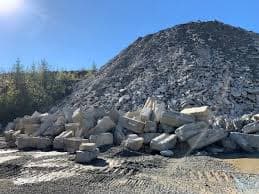
Brick, Block & Masonry Disposal in East Tennessee
Brick and block disposal is a narrower problem than concrete, but it's nearly as annoying. You tear out an old chimney, demo a CMU foundation wall, or replace a brick facade, and you're left with pallets of hard, heavy material that doesn't fit in a roll-off dumpster without hitting the weight cap. It's too dense for regular trash and too specific for the average junk hauler to want to touch.
Here's how masonry rubble gets handled in East Tennessee, and what you can bring to the yard.
What We Accept on the Masonry Line
If it's fired clay or cementitious block, we probably take it, free when clean. The list covers most of what comes off a residential or light-commercial demo:
- Clean red brick and common brick
- Fire brick from old fireplaces and chimneys
- CMU block, also called cinder block or concrete block
- Old mortar in reasonable amounts, still attached to the brick or block
- Natural stone masonry from old chimneys, foundations, and fieldstone walls
You don't have to chip the mortar off. You don't have to sort brick from block. It all gets processed through a similar crushing and screening stream, so a mixed masonry load is fine. Concrete, with or without rebar, can ride along in the same load. See our full what we accept guide.
What We Don't Take
The exclusions are short but firm:
- Brick painted with lead-based coating. If the structure is pre-1978 and the paint hasn't been abated, we can't accept it.
- Asbestos-containing mortar. Rare, but possible on very old industrial or institutional buildings. If you know or suspect ACM, it needs a specialty abatement path, not our yard.
- Loads mixed with wood, drywall, insulation, roofing, or trash. If your load is mixed, call (865) 999-0857 before you haul.
If you're not sure what you have, call before you load up.
Why the Landfill Isn't a Fit for Masonry-Only Loads
Brick is heavy. That's the whole issue. When landfills charge by the ton, dense material like brick and block turns into an oversized bill for what's really a small pile by volume. The Blount County landfill runs about $60 a ton, is open weekdays only, and may turn away out-of-county haulers. Knox County convenience centers refuse brick and block outright. They're set up for household waste, not construction debris.
That leaves a very narrow window if you want to do it "the official way," and none of it is convenient.
Why Roll-Off Dumpsters Don't Work Great Either
Roll-off companies know brick is a weight bomb. Many cap heavy-material dumpsters at small sizes, and even then a single chimney demo or a CMU foundation wall can blow through the included weight allowance. Overweight fees stack fast. Some haulers ban brick, rock, and concrete outright. You'll see it in the fine print when you book online. More on that in can I put concrete in a dumpster.
So the dumpster shows up, you load it half full, and you get a call from the driver telling you he can't tip it as-is. That's a bad afternoon.
How SMSG Handles the Material
Once it's on the yard, the brick and block go through a crushing and screening process along with concrete. That material ends up in recycled aggregate products that go back into base and drainage applications. Here's how concrete recycling works from demo pile to driveway.
How the Drop-Off Works at the Gate
Drive up during hours. Staff will direct you where to dump. Dump, sweep out the bed, and you're back on the road. Clean masonry is free, whether you rolled up in a half-ton pickup or a tri-axle dump truck. No scale ticket, no per-ton math, no follow-up invoice.
That's the whole reason contractors like using the yard for masonry work. You can tell your customer disposal is covered before you swing a hammer.
Bringing a Load In
If you've got brick, block, or masonry rubble to move and you don't want to wrestle with a dumpster or a landfill scale, the yard is set up for exactly this kind of drop. Smoky Mountain Sand & Gravel is at 245 Brookdale Road in Maryville, open Monday through Friday 7 AM to 5 PM and Saturday 8 AM to noon. See free concrete drop-off for the details, or call (865) 999-0857 if you want to confirm the load is a good fit before you drive over.
Frequently Asked Questions
Where can I dump old brick in East Tennessee?
Smoky Mountain Sand & Gravel at 245 Brookdale Rd in Maryville takes clean brick, block, and masonry rubble free. No scale and no appointment for clean loads.
Can I bring brick with mortar still attached?
Yes. A reasonable amount of mortar on the brick or between blocks is fine. It all crushes together.
Do you take painted brick?
Only if the paint is post-1978 latex or standard exterior paint. Pre-1978 lead-based paint is a no, because it changes what we can do with the crushed product.
Can I bring a mixed load of brick and concrete?
Yes. Brick, block, and concrete all go into similar processing, so a clean load of those doesn't need sorting. Loads with wood, drywall, or trash should call (865) 999-0857 first.
Do Knox County convenience centers take brick?
No. Knox County convenience centers refuse brick, block, and concrete. They're set up for household waste.
Related Guides
Ready to get started?
Serving Blount County, Knox County, and the greater East Tennessee region. Mon-Fri 7am-5pm, Saturday 8am-12pm.