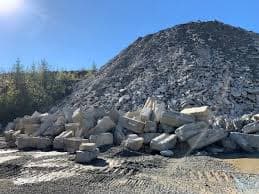
How to Break Up a Concrete Driveway: DIY Guide and Disposal
A small concrete driveway, say 8 feet by 20 feet at 4 inches thick, comes out to about 2.5 tons of rubble. That's a weekend job with hand tools if you're patient and you don't need to be gentle about it. A full 12x40 driveway with rebar is a different animal, and you're going to want a machine.
Either way, breaking up your own driveway saves $2,000 to $5,000 compared to hiring a demo crew. Here's the honest guide, plus what to do with the pieces once they're out.
Estimate the Load Before You Start
Before you swing anything, do the math. It changes what tools you need and how many trips you'll make to dispose of it.
The formula:
Length (ft) × Width (ft) × Thickness (ft) = Cubic Feet Cubic Feet ÷ 27 = Cubic Yards Cubic Yards × 1.85 = Tons
A typical 12x40 driveway at 4 inches thick works out to:
- 12 × 40 × 0.33 = 158 cubic feet
- 158 ÷ 27 = 5.9 cubic yards
- 5.9 × 1.85 = about 11 tons of rubble
A pickup truck bed holds roughly half a ton to a ton of broken concrete before you're overloading the springs. Do the math and you'll see why hauling capacity matters as much as the demo itself.
Tools by Driveway Size
Match the tools to the job. Under-equipping a big driveway wastes a weekend. Over-renting a small one wastes money.
Small: Up to 4" Thick, Under 10 Cubic Yards
- 8-10 lb sledgehammer
- Splitting wedge (helps start cracks)
- 5-6 ft pry bar for lifting
- Wheelbarrow
Slow but effective. Expect 8-12 hours of hard swinging for a fit adult.
Medium: 4-6" Thick, Up to 20 Cubic Yards
- Rent an electric jackhammer or a 60-90 lb pneumatic breaker
- Rental runs roughly $60-$100 per day at big-box tool rentals
- Still need a sledgehammer and pry bar for cleanup
Cuts the labor by 60-70%. A one-day rental usually finishes a medium driveway if you start at dawn.
Big: 6"+ Thick, Reinforced, or Over 20 Cubic Yards
- Mini excavator with hydraulic breaker attachment, roughly $400-$500 per day
- Or hire a demo crew and skip the DIY
At this size the physical toll and the rental-day math usually tip toward a machine or a pro.
Safety First (Don't Skip This)
Concrete demo is the kind of work that hurts you slowly if you cut corners.
- Steel-toe boots. Chunks fall. So does the sledgehammer sometimes.
- Safety glasses with side shields. Concrete flakes fly sideways, not just forward.
- Hearing protection. Especially with a jackhammer.
- N95 or better dust mask. Concrete dust contains crystalline silica, which is a real lung hazard. Wet the concrete with a garden hose before and during breaking to knock the dust down.
- Heavy leather gloves. Rebar tears skin fast.
- Never work alone with a jackhammer. If it kicks and pins you, you need someone to shut it off.
- Watch for rebar snap-back. Reinforced slabs can spring wire under load. Stand clear of the cut line when you free a piece.
Long sleeves and long pants, even in summer. Concrete shards give you a hundred small cuts otherwise.
Technique: The 4-Step Approach
The wrong technique turns 10 hours of work into 30. The right one moves.
1. Score the Perimeter
If you own or can rent a circular saw with a masonry blade, cut a 1-inch groove along the perimeter and every 2-3 feet across the slab. This gives your hammer a place to break to. Not required, but it doubles your speed.
2. Work in Strips
Start along one edge, not in the middle. Break a 2-foot-wide strip along the edge, remove the pieces, then work inward. Edges have less resistance because they can flex outward.
3. Target 12-18" Chunks
Smaller than 12 inches wastes swings. Bigger than 18 inches won't fit in a pickup bed and is a two-person lift. Aim for pieces you can pick up alone.
4. Pry, Don't Just Smash
Once a chunk cracks free, slide the pry bar under and flip it. Broken concrete is easier to reduce further when it's off the ground. Sledgehammer oversized chunks into hauling size at the wheelbarrow, not on the driveway.
Rebar Handling
If your driveway has rebar or wire mesh, expose it as you break the concrete around it. Cut it with:
- Bolt cutters (for wire mesh and #3 rebar)
- Angle grinder with a metal cutoff wheel (for #4 rebar and up)
Rebar left embedded in chunks is fine at SMSG; we pull the steel during crushing (see do I need to separate rebar from concrete). Don't leave long strands sticking out of pieces you're hauling. They puncture tires, gouge truck beds, and are a real injury risk when you unload.
What to Do with the Broken Concrete
You've got the driveway out. Now you've got a pile. Three options:
Reuse It in Your Yard
Broken concrete makes great garden bed borders, retaining wall material (called urbanite), stepping stones for a path, or fill under a shed. Free, and it's the greenest option. A 12x40 driveway is more than most yards can absorb, though.
Give It Away
Post a Craigslist or Facebook Marketplace "free broken concrete" listing. In East Tennessee these move fast, sometimes within hours. Landscapers and DIYers building retaining walls will show up with a trailer and haul it themselves.
Haul It to a Recycling Yard
Smoky Mountain Sand & Gravel in Maryville accepts clean broken concrete free, from a pickup bed up to a tri-axle. No scale, no appointment. The Blount County Landfill charges about $60 per ton for the same rubble, and the material just gets buried. At our yard it gets crushed and recycled into aggregate for driveways and drainage. We're 25 minutes south of Knoxville, open Monday through Friday 7 AM to 5 PM and Saturday 8 AM to noon. If the pile has dirt, wood, or trash mixed in, call (865) 999-0857 before you haul.
More options in what to do with broken concrete and how to load your truck for drop-off.
The Short Version
Do the math first so you know what you're dealing with. Match your tools to the slab, not to your ego. Wear the safety gear, wet the concrete, work in strips from the edge inward, and aim for 12-18 inch chunks.
Once it's out, reuse what you can, give away what you can't, and haul the rest to a recycling yard.
Smoky Mountain Sand & Gravel accepts clean broken concrete free at our Maryville yard, Monday through Saturday. Call (865) 999-0857 with questions about load sizes or what counts as clean. Hiring it out instead? See concrete tear-out cost in Tennessee.
Frequently Asked Questions
How long does it take to break up a driveway with a sledgehammer?
A small 4-inch slab, about 8 by 20 feet, runs 8 to 12 hours for a fit adult working steadily. Thicker slabs can take 20 hours or more, which is when renting a jackhammer pays off.
Do I need to break the concrete up before hauling it?
For a pickup, yes. Aim for 12 to 18 inch chunks so they load and unload without a two-person lift.
Where do I take the broken concrete when I'm done?
Smoky Mountain Sand & Gravel in Maryville takes clean broken concrete free, with or without rebar. No scale and no appointment.
How much will disposal cost?
Clean concrete drops off free at SMSG. The Blount County Landfill charges about $60 per ton, so an 11-ton driveway would run about $660 there.
How many tons of concrete is a driveway?
A 12 by 40 foot driveway at 4 inches thick produces about 11 tons of rubble. A pickup bed holds roughly half a ton to a ton safely.
Can I burn concrete to make it easier to break?
No. Concrete does not burn, and heating it is dangerous. Wet it to control dust and keep swinging.
Related Guides
Ready to get started?
Serving Blount County, Knox County, and the greater East Tennessee region. Mon-Fri 7am-5pm, Saturday 8am-12pm.