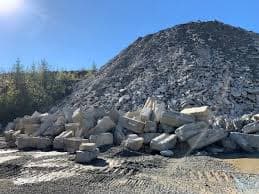
Is Concrete Recyclable in Tennessee? Yes, Here's How
Yes. Concrete is one of the most recyclable construction materials in existence. Tennessee has active concrete recycling facilities across the state, and TDEC classifies clean concrete as a beneficial-use material rather than solid waste. Nearly 100% of a clean concrete load can go back into new construction as crushed aggregate.
If you have a driveway rip-up, a foundation cut, or a stack of broken slab in the truck bed, the answer to "can I recycle this?" is almost always yes.
What "Recyclable" Actually Means for Concrete
Recycling concrete does not mean melting it down or reconstituting it into a fresh pour. It means crushing the old material into sized aggregate that gets reused in new construction.
The output goes by a few names:
- RCA: Recycled Concrete Aggregate
- Crusher run: dense-graded base material
- Road base: sub-grade for asphalt and concrete pavement
- Drainage stone: clean, angular fractions used in French drains and pipe bedding
Functionally, this is the same aggregate that would have come out of a virgin limestone quarry. It just took a detour through a building or a sidewalk first.
The Recycling Process, Step by Step
Every concrete recycler in Tennessee runs some version of the same five-step process:
1. Delivery to a Recycling Yard
Contractors, homeowners, and demolition crews bring loads of broken concrete to a permitted recycling yard. Material comes in loose in dump trucks, in dumpsters, or off pickup beds and trailers.
2. Sorting
Yard staff check for contamination: sections of PVC, wood, insulation, trash. Rebar and wire mesh are fine at most real recyclers, including ours; magnets pull the steel out after crushing.
3. Primary Crushing
Slab pieces feed into a jaw crusher or impact crusher. These machines break oversized chunks down to workable sizes, typically anywhere from fines up to 3 or 4 inches, depending on how the crusher is set.
4. Screening
Crushed material runs across a screening deck that separates it into sized products: #57 stone, #4 stone, crusher run, fines. Anything oversized cycles back through the crusher.
5. Secondary Processing and Load-Out
Depending on the end market, some material gets re-crushed or washed. Finished product piles are loaded into customer trucks and sent to the next job site.
Where the Resulting Aggregate Gets Used
Recycled concrete replaces virgin stone in almost every application that does not require structural strength. Common uses include:
- Driveway base and sub-base
- Road sub-grade for county roads and parking lots
- Parking lot construction
- French drain and yard drain aggregate
- Retaining wall backfill
- Pipe and utility bedding
- Erosion control (larger chunks used as RCA rip-rap)
- Structural fill for building pads
For most of these applications, RCA performs like virgin quarry stone. For SMSG RCA pricing, call (865) 999-0857.
What Qualifies as Recyclable Concrete
You can recycle:
- Clean broken slab and sidewalk sections
- Driveway rip-ups
- Foundation cuts
- Structural slab pieces
- Curb-and-gutter concrete
- Broken block and paver material (some yards)
You cannot recycle (or the yard will reject it):
- Concrete contaminated with oil, fuel, or hazardous material
- Concrete so heavily reinforced that steel outweighs the aggregate
- Painted or coated surfaces in large quantities
- Concrete mixed with drywall, insulation, or general C&D debris
The rule of thumb: if it looks like concrete and mostly is concrete, a recycler will take it.
Tennessee-Specific Rules
The Tennessee Department of Environment and Conservation (TDEC) recognizes concrete as Class IV construction and demolition material eligible for beneficial reuse. Recyclers operate under solid-waste permits that specifically allow them to accept, process, and resell clean concrete.
Landfilling clean concrete is legal in Tennessee, but it is wasteful and expensive. C&D landfills charge per-ton disposal fees (about $60 per ton at the Blount County Landfill), take up finite airspace, and offer no return on the material. Recycling costs less (clean concrete is free at SMSG), keeps the material in the economy, and reduces the demand for new quarry blasting.
There is no state mandate requiring concrete recycling, but between the cost savings, LEED credits, and TDOT specifications that increasingly favor recycled content, most contractors choose it.
Where to Take Concrete for Recycling in East Tennessee
If you are in the East Tennessee region, Smoky Mountain Sand & Gravel accepts clean concrete for recycling free, with or without rebar, no scale and no appointment. Mixed loads: call (865) 999-0857 before you haul. The yard is at 245 Brookdale Rd in Maryville, open Monday through Friday 7 AM to 5 PM and Saturday 8 AM to noon. See concrete disposal near me for more options by area.
The service area covers roughly a 50-mile radius, which includes Knoxville, Blount County, Sevier County, Loudon County, Anderson County, and Roane County. Contractors doing tear-outs in Knox or Blount can typically drop and be back on the job in under an hour.
Bottom Line
Concrete is one of the few construction materials that recycles cleanly and economically. Tennessee has the infrastructure, TDEC has the regulatory framework, and the crushed product performs as well as virgin stone for the vast majority of uses. Skipping the landfill is usually the cheaper move.
Have a load of broken concrete you need to get rid of? Smoky Mountain Sand & Gravel accepts clean concrete for recycling at our Maryville yard and serves contractors and homeowners across East Tennessee. Clean loads are free. Call (865) 999-0857 with questions. For the full process, see how concrete recycling works and what is recycled concrete aggregate.
Frequently Asked Questions
Can I recycle concrete with rebar in it?
Yes. The crusher breaks the concrete off the steel, and magnets pull the steel out. At SMSG you do not need to separate rebar first.
How much of a concrete load is recyclable?
Close to 100 percent of clean concrete. The number only drops if the material is contaminated or mixed with other C&D debris.
Is recycled concrete as strong as virgin aggregate?
For base and sub-grade uses, quality RCA meets the same specifications as virgin stone. Structural concrete mixes have tighter limits on recycled content.
Does Tennessee require concrete recycling?
No. There is no state mandate. Contractors choose recycling because it costs less than landfill disposal and can earn LEED credit.
Where is the closest concrete recycler in East Tennessee?
For Maryville, Alcoa, Knoxville, and Blount County, Smoky Mountain Sand & Gravel at 245 Brookdale Rd in Maryville. Clean concrete drops off free.
Related Guides
Ready to get started?
Serving Blount County, Knox County, and the greater East Tennessee region. Mon-Fri 7am-5pm, Saturday 8am-12pm.