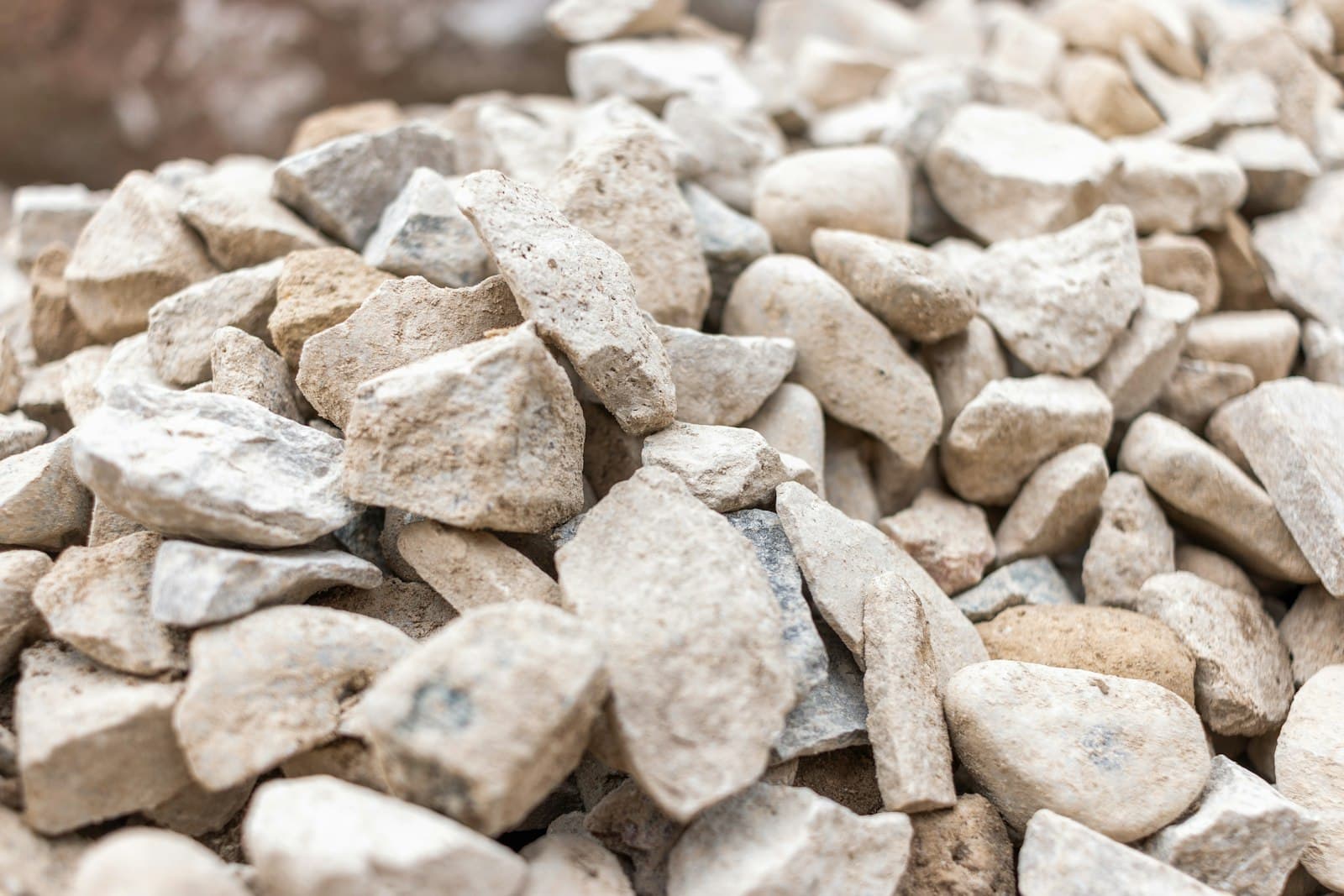
RCA Gravel vs Crushed Concrete: Same Stuff, Different Name?
Walk into a building supply store and ask for "RCA gravel" and you might get a blank stare. Ask for "crushed concrete" and you'll probably get pointed to the same pile. So what's going on - same product, different products, or just marketing?
Honest answer: they're basically the same material, but the words around them aren't always interchangeable. What each term actually means and which one to say when you call:
Quick Definitions
- Crushed concrete is the raw material - broken-up concrete that's been run through a crusher
- RCA (Recycled Concrete Aggregate) is what you call crushed concrete once it's been screened, sized, and qualified for use as a construction aggregate
- RCA gravel is a casual term for RCA when it's being used in a driveway or landscape application
All three describe the same general thing: ground-up old concrete getting used as new gravel. The differences show up when you start talking quality control and specs.
Where the Confusion Comes From
A lot of people first hear about this stuff from a contractor or a neighbor: "yeah, I just put crushed concrete down for my driveway." Then they Google it and find articles about RCA, recycled aggregate, dense-graded crusher run, #57 stone, and a half-dozen other terms. By the time they call a yard, they don't know what to ask for.
The industry doesn't help. Different regions use different names for basically the same product:
- East Tennessee / Southeast: Usually "crushed concrete" or "recycled concrete"
- Northeast US: Often "RCA" or "RAP" (Recycled Asphalt Pavement - different material, see below)
- Midwest: "Recycled aggregate" or "rec con"
- Federal / DOT specs: "RCA" or "RCM" (Recycled Concrete Material)
At our yard, ask for RCA gravel or crushed concrete and you'll get pointed at the same pile. We don't care what you call it.
What's Actually In It?
RCA / crushed concrete starts as broken-up concrete from demolition - old driveways, sidewalks, foundations, parking lots, bridge decks. The material gets dumped at a recycling facility (like our yard in Maryville), runs through a crusher that breaks it down to specific sizes, then gets screened to separate it by grade.
What ends up in a pile of RCA:
- Crushed concrete particles, ranging from dust up to about 2" depending on grade
- Trace amounts of rebar fragments (we pull most of it during processing with magnets, but very small pieces sometimes remain)
- Occasional bits of brick, tile, or other masonry from mixed loads
- Some natural aggregate from the original concrete mix
What's not in it (at our yard, anyway):
- Asphalt (that's a separate material - see below)
- Wood, drywall, or trash
- Soil or organics
- Paint or chemicals
If you're getting RCA from a facility that doesn't sort cleanly, you might see more contamination. Ours is screened to spec.
RCA vs. RAP - Don't Mix These Up
While we're clearing things up: RCA (recycled concrete) and RAP (recycled asphalt pavement) are NOT the same. RAP is ground-up old asphalt and has very different properties. RAP is black, has a slight petroleum smell on hot days, and will partially re-bond if compacted. RCA is gray, has no smell, and behaves more like traditional gravel.
We're a concrete-only facility, so we don't carry RAP. Need recycled asphalt? That's a different vendor.
The Grades of RCA
This is where the "are they the same thing" question gets more nuanced. There are several common grades of RCA, and they're definitely NOT interchangeable:
- Crusher run RCA - Mix of sizes from dust up to ~1.5". Compacts dense and tight. Best for driveways and base material. This is what most homeowners want.
- #57 RCA - Clean stone, ~1" pieces, no fines (no dust). Used as drainage layer, French drains, septic field stone, top dressing.
- #411 RCA - Smaller dense-graded blend, fine to ~3/4". Used for finish layers and tight compaction.
- #2 RCA / "base rock" - Bigger pieces, 2-3", used as bulk fill or deep base under heavy loads.
So if you call and say "I need crushed concrete for my driveway," we'll point you to crusher run. Say "I need RCA for my French drain," and you're getting #57. Same material family, different grades for different jobs.
For the full breakdown, see our aggregate sizes guide.
Is RCA "As Good As" Virgin Stone?
This is the other question people are usually after. Short answer: yes, and in some applications it's actually better.
Why:
- Angular shapes interlock better. Crushed concrete has jagged, irregular edges that grab onto each other when compacted. Virgin river stone is smoother and shifts more under load.
- Residual cement re-binds slightly. Trace amounts of un-hydrated cement in the RCA can reactivate when wet, giving you a slight self-cementing effect over time. Virgin stone doesn't do this.
- Dense gradation packs tight. Crusher run RCA includes everything from dust to gravel-sized pieces, so it fills voids and compacts to nearly the density of poured concrete.
The trade-off is appearance. RCA looks like broken concrete - gray with the occasional white, tan, or colored fleck. If you want the uniform look of decorative landscape gravel, virgin crushed stone gives you more aesthetic control. See our full RCA vs. gravel comparison for the side-by-side.
For load-bearing performance and dollar-for-dollar value, RCA wins almost every time. That's why TDOT, county road departments, and most commercial contractors have been using it for decades. (SMSG is in the process of getting on the TDOT approved aggregate source list - more on that as it develops.)
Cost Difference
RCA / crushed concrete is typically 30-50% cheaper than equivalent virgin crushed stone. That's not a small gap. On a 20-ton driveway delivery, you're saving $200-$400.
Why so much cheaper? The raw material is basically free. Demo contractors haul the concrete to us instead of paying $60/ton to landfill it. We crush, screen, and sell it back as RCA. The whole value chain is local.
Check our pricing for current rates, or use the calculator to estimate your project.
So What Should I Call It When I Order?
At our yard, any of these work:
- "I need a load of RCA"
- "I need crushed concrete"
- "I need recycled aggregate"
- "I need 8 tons of crusher run, the recycled stuff"
- "I need gravel for my driveway - the cheap kind"
We'll figure it out. What matters more than the name is being specific about:
- Grade or size (crusher run, #57, etc.) - or just describe the application and we'll pick
- Tonnage - use the calculator if you're not sure
- Delivery address - for the delivery quote
- Access notes - narrow driveway, low branches, soft ground, anything our driver should know
For a deeper primer on the material itself, our complete RCA guide covers everything in one place.
Wrapping Up
RCA gravel and crushed concrete are the same material. The terms get used interchangeably and any reputable yard knows what you mean. The thing that matters when you order is getting the right grade for your application - and we're happy to walk you through that.
Call (865) 999-0857 with your project details, or stop by 245 Brookdale Rd, Maryville. Or use the contact form for a written quote.
We've been crushing and selling RCA since we opened. Whatever you call it, we've got it.
Ready to get started?
Serving Blount County, Knox County, and the greater East Tennessee region. Mon-Fri 7am-5pm, Saturday 8am-12pm.