RCA for Retaining Walls: Which Grade Do You Need?
Ask any wall guy why retaining walls fail and you'll get the same answer nine times out of ten: water. Not the wall block, not the mortar, not the caps. Water pressure builds up behind the wall, has nowhere to go, and eventually pushes the wall over or blows it out.
Backfill drainage is what stops that from happening. And backfill drainage means the right aggregate, in the right layer, at the right depth. Virgin stone works. Recycled concrete aggregate works just as well. Here's how to spec it right.
Why Retaining Walls Need Drainage in the First Place
When water sits behind a wall, it turns the soil into saturated mud. Saturated soil weighs more than dry soil, and it exerts what engineers call hydrostatic pressure against the back of the wall. On a 6-foot wall, that pressure can double or triple what dry soil would push against.
Most residential walls aren't engineered to hold saturated backfill. The design assumes water will drain out through the backfill and exit through weep holes or a perforated drain pipe. Skip the drainage layer, and you've built a dam. Dams need a lot more wall than most homeowners are ready to pay for.
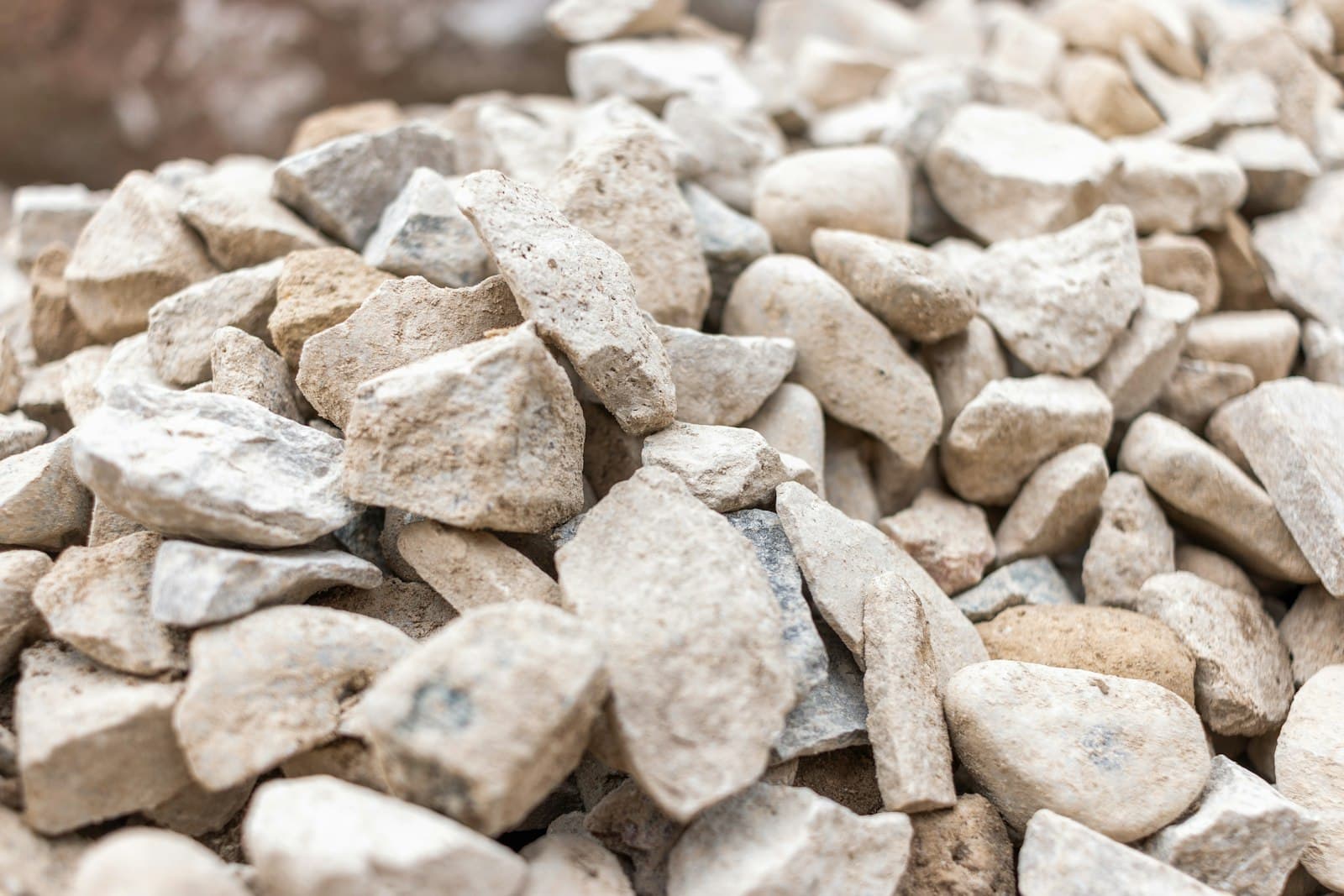
Recycled concrete aggregate does the same job as virgin crushed stone in this application. It's angular, it interlocks, and it drains fast. That's the case for using it.
The Two RCA Grades You Care About
For retaining wall backfill, two grades of RCA do all the work:
- RCA #57 (clean, about 3/4 to 1 inch). No fines, all clean stone. This is the drain layer. Water moves through it fast, and it doesn't clog with silt.
- RCA crusher run (1 inch minus with fines). A mix of stone sizes down to fines. Compacts tight and holds shape. This is the bulk fill.
Some jobs use just one grade. Bigger or wetter walls use both. The trick is knowing which combination fits your wall.
For a fuller breakdown of RCA sizing, our post on aggregate sizes and grades covers the technical side.
Sizing by Wall Height
Wall height drives everything. Taller walls hold back more soil, which means more water pressure, which means more drainage capacity. Here's the working guide most contractors use:
| Wall Height | Drainage Layer Width | Drain Pipe | Bulk Fill Behind Drain |
|---|---|---|---|
| Under 3 ft | 6 to 12 inches of 3/4 clean | Optional | Native soil or crusher run |
| 3 to 4 ft | 12 inches of 3/4 clean | 4-inch perf pipe | Crusher run |
| 4 to 6 ft | 12 to 18 inches of 3/4 clean | 4-inch perf pipe, gravel bedded | Crusher run to grade |
| 6 to 8 ft | 18 to 24 inches of 3/4 clean | 4-inch perf pipe, wrapped in filter fabric | Crusher run to grade |
| Over 8 ft | Engineered design required | Engineered | Engineered |
Anything over 4 feet in Tennessee typically needs a permit and often an engineer's stamp. Don't guess on the engineered ones.
How to Layer the Backfill
Order matters. Here's the sequence from wall to soil:
- The wall block or timbers. Level base, proper batter, whatever your wall system calls for.
- A row of drainage stone right against the wall. RCA #57, minimum 6 inches wide for a small wall, up to 24 inches for a tall one.
- A perforated drain pipe at the base. Set on top of a 4-inch bed of clean stone, sloped 1 to 2 percent to daylight or a drain outlet. Wrap the pipe in filter fabric on walls taller than 4 feet.
- Filter fabric between the drainage layer and the bulk fill. Keeps silt from washing into the drain stone and clogging it.
- Bulk fill behind the drainage layer. Crusher run RCA works great here. Compact in 6-inch lifts.
- Cap with 6 inches of topsoil or native fill. This sheds surface water off the top of the wall rather than letting it soak straight in.
Skip any of those layers and you're gambling. The filter fabric between the drain and the bulk fill is the one most DIY installs miss, and it's the one that turns a working drainage system into a clogged useless one within a couple years.
Real Tonnage Example: 30 Foot Long, 6 Foot Tall Wall
Let's size out a common wall. Thirty feet long, six feet tall, terraced backfill against a sloped yard. Here's the aggregate math:
Drainage layer. 18 inches wide, 6 feet tall, 30 feet long. That's 22.5 cubic feet per linear foot, or 675 cubic feet total. Convert to tons: about 27 tons of RCA #57.
Drain pipe bedding. 4-inch bed under the pipe, 12 inches wide, 30 feet long. Roughly 10 cubic feet, or half a ton of clean stone. Rolled into the drainage layer estimate.
Bulk fill. Depends on how much soil you excavated and how much you're backfilling. For this size wall, budget another 15 to 25 tons of crusher run RCA.
Total aggregate: roughly 42 to 52 tons.
For current RCA and delivery pricing on that tonnage, call (865) 999-0857.
Numbers move around based on your specific job. Run yours through our aggregate calculator once you've got wall dimensions locked in.
RCA for Gabion Basket Walls
Gabion walls are a special case. Instead of block or timber, wire baskets full of rock do the work. Gabion fill wants angular stone in roughly the 2-inch to 6-inch range, bigger than the basket mesh. Our standard products (RCA crusher run and RCA #57) are too small for most gabion mesh, so call (865) 999-0857 to ask before you plan around us for gabion fill. Our RCA vs river rock vs 57 stone post covers appearance differences.
Where People Get It Wrong
A few mistakes we see over and over:
- Using crusher run against the wall instead of clean stone. Crusher run has fines. Fines wash into your drain pipe and clog it. Use clean stone as the drainage layer.
- Skipping the filter fabric. Silt migrates into your drain stone from the bulk fill side within a couple years. Filter fabric stops it. It costs almost nothing.
- Forgetting to slope the drain pipe. A perforated pipe that runs level is a pipe full of stagnant water. Slope it 1 to 2 percent to daylight.
- Compacting the drainage layer. Don't. Compaction closes up the voids that let water move. Compact the bulk fill instead.
- Undersizing the drainage width. A 4-inch drainage layer behind a 6-foot wall is not enough. Go wider than you think you need.
What SMSG Will Carry for Retaining Wall Jobs
Our materials page lists what we stock. For retaining walls, that's:
- RCA #57 for drainage layers
- RCA crusher run for bulk fill
Delivery is available across Blount, Knox, Loudon, and Sevier County. Pickup at 245 Brookdale Rd, Maryville. For current pricing, call (865) 999-0857. For the drainage details (pipe, fabric, weep holes), see drainage behind retaining walls and best backfill material for retaining walls.
Ready to Spec Your Wall
Every retaining wall lives or dies by its backfill. RCA gives you the drainage performance of virgin stone from a local, recycled source.
Call (865) 999-0857 to talk through your wall project, or visit our contact page for the map to 245 Brookdale Rd, Maryville. Hours: Monday through Friday 7 AM to 5 PM, Saturday 8 AM to noon.
Frequently Asked Questions
What gravel goes behind a retaining wall?
Clean stone with no fines, like RCA #57, goes directly behind the wall as the drainage layer. Crusher run can go behind that as compacted bulk fill.
How wide should the drainage layer be behind a retaining wall?
About 12 inches for a 3 to 4 foot wall, 12 to 18 inches for 4 to 6 feet, and 18 to 24 inches for 6 to 8 feet. Walls over 8 feet need an engineered design.
Can I use crusher run directly against a retaining wall?
No. Crusher run has fines that wash into the drain pipe and clog it. Use clean stone against the wall.
Should I compact the drainage stone behind a wall?
No. Compaction closes the voids that let water move. Compact the bulk fill behind it in 6-inch lifts instead.
How much aggregate does a 30 by 6 foot retaining wall need?
Roughly 42 to 52 tons total: about 27 tons of drainage stone plus 15 to 25 tons of crusher run bulk fill. Call (865) 999-0857 for current RCA pricing.
Related Guides
Ready to get started?
Serving Blount County, Knox County, and the greater East Tennessee region. Mon-Fri 7am-5pm, Saturday 8am-12pm.