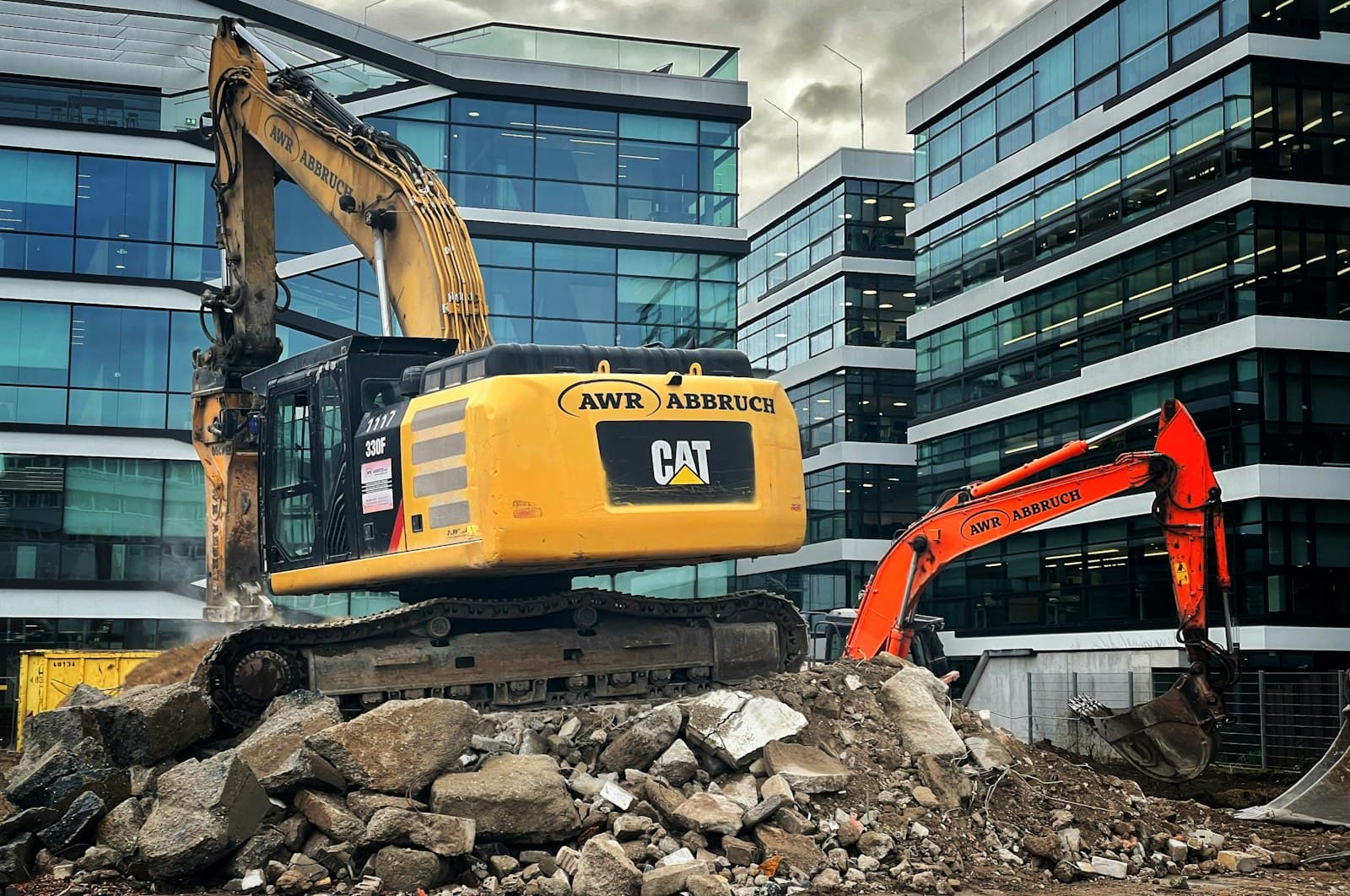
How to Dispose of Cinder Blocks and Concrete Blocks
Quick answer: Clean cinder blocks and concrete blocks (CMU) are recyclable. Whole blocks are easy to give away or reuse. Broken blocks, mortar chunks, and grouted blocks with rebar drop off free at Smoky Mountain Sand & Gravel, 245 Brookdale Rd, Maryville, TN. No scale, no appointment for clean loads. Painted or tar-coated block: call (865) 999-0857 first.
Blocks pile up fast. A torn-out retaining wall, an old crawlspace foundation, a backyard grill surround, or the leftover pallet from a project that never happened. They are too heavy for the trash can and too awkward for most junk haulers. Here is how to get rid of them without paying by the ton.
Cinder Block vs Concrete Block: Does It Matter?
For disposal, no. Both go in the same pile at our yard. But it helps to know what you have.
| Cinder block | Concrete block (CMU) | |
|---|---|---|
| What's in it | Cement plus coal ash (cinders) as aggregate | Cement plus sand and crushed stone |
| Where you see it | Older homes, mostly pre-1970s | Nearly all block made today |
| Typical weight (8x8x16) | Lighter end, high 20s to low 30s lb | About 30 to 38 lb |
| Recyclable? | Yes, when clean | Yes, when clean |
| Free at SMSG? | Yes, clean loads | Yes, clean loads |
Most people say "cinder block" for any gray hollow block. True cinder block is mostly gone from new construction. If your blocks came from a home built in the last few decades, they are almost certainly concrete masonry units (CMU). Either way, the drop-off rules are the same.
How Much Does a Cinder Block Weigh?
A standard 8x8x16 hollow block weighs about 28 to 38 pounds. Lightweight block sits at the low end. Normal-weight block sits at the high end. Wet block weighs more.
| Block type | Approximate weight each |
|---|---|
| 8x8x16 lightweight, hollow | 28-32 lb |
| 8x8x16 normal-weight, hollow | 33-38 lb |
| 8x8x16 with grouted cells and rebar | Roughly 70-80 lb |
| 4x8x16 solid cap or half block | 20-30 lb |
| 12x8x16 hollow | 45-55 lb |
That grouted number surprises people. Foundation and retaining wall blocks often have every cell (or every other cell) filled with grout and rebar. Those blocks are about twice the weight of an empty one.
How Many Blocks Fit in a Pickup Safely?
This is where people get in trouble. A pickup bed holds a lot more block by volume than the truck can legally and safely carry. Load by weight, not by how full the bed looks.
The math is simple: usable payload divided by weight per block. Find your payload on the sticker inside the driver's door. Subtract the weight of you, any passengers, and anything else in the truck.
| Truck | Typical usable payload | Empty blocks (~35 lb) | Grouted blocks (~75 lb) |
|---|---|---|---|
| Small or midsize pickup | 1,000-1,400 lb | 28-40 | 13-18 |
| Half-ton (F-150, Silverado 1500, Ram 1500) | 1,400-2,000 lb | 40-57 | 18-26 |
| Three-quarter-ton (2500 series) | 2,500-3,500 lb | 70-100 | 33-46 |
| One-ton (3500 series) | 3,500-5,000 lb | 100-140 | 46-66 |
| 7x14 dump trailer | Check the trailer rating | Often a full pallet or more | Check the rating |
Payload varies a lot by trim, cab, and engine, so treat this as a starting point. A full pallet of 8-inch block (often around 90 blocks) weighs over 3,000 pounds. That is too much for a half-ton truck, even though it fits in the bed.
Signs you are overloaded: the rear sags well below level, the front feels light in the steering, or braking feels soft. Take two trips. For more on weight, tarps, and load balance, see our guide to loading your truck for a concrete drop-off.
Option 1: Reuse the Whole Blocks
Whole, uncracked blocks have real value. Before you haul anything, pull out the good ones.
- Raised garden beds. Set blocks on end in a rectangle. The hollow cells hold soil for herbs or flowers.
- Fire pit ring or grill surround. Use solid cap block on top. Avoid using ordinary hollow block directly in the fire, since it can crack from heat.
- Steps and pavers. Bury solid blocks flush for a rough path in a work area.
- Shelving, sawhorse supports, or trailer chocks. Practical around a barn or shop.
- Low landscape walls. Fine for a short, dry-stacked border. Anything taller that holds back soil needs proper design and drainage.
Option 2: Give Them Away
Whole block moves fast for free. Post on Facebook Marketplace, Craigslist, Nextdoor, or a local buy-nothing group with a photo, a rough count, and "free, you haul." Stack them by the driveway so pickup is easy. Broken pieces and mortar-crusted chunks are a harder sell, which is where a recycling yard comes in.
Option 3: Curbside Trash or a Dumpster
Most curbside trash services will not take block or concrete. The weight damages carts and trucks. Check with your hauler, but do not count on it for more than a piece or two.
Roll-off dumpsters can take block, but heavy debris usually comes with weight limits and per-ton overage charges. A few dozen blocks add up to a ton quickly. Our post on putting concrete in a dumpster runs the numbers.
Knox County convenience centers refuse concrete and block. The Blount County Landfill takes it at about $60 per ton, weekdays only, roughly 7 AM to 3 PM.
Option 4: Free Drop-Off at a Recycling Yard
Clean block is concrete, and we recycle it into aggregate. At Smoky Mountain Sand & Gravel, clean loads drop off free.
What's fine to bring:
- Whole or broken cinder block and CMU
- Blocks with mortar still stuck to them. No need to chip it off.
- Grouted blocks with rebar in the cells. Rebar is fine.
- Cap block, split-face block, and decorative block
- Mixed loads of block, brick, concrete, and natural stone
Call (865) 999-0857 before hauling:
- Painted block, especially old paint of unknown age
- Foundation block with tar or black waterproofing coating on it
- Block with foam insulation in the cells
- Any load with dirt mixed in
Not accepted: trash, wood, drywall, roofing, mixed construction debris, or household waste. Pull any wood forms, sill plates, or anchor bolts with wood attached before you load.
If your block came out of a chimney or brick-veneer wall, our brick and masonry disposal guide covers mixed masonry loads in more detail.
Do Filled Blocks, Mortar, and Rebar Cause a Problem?
No. This is the most common question we get about block.
| What's in or on the block | OK to drop free? |
|---|---|
| Mortar on the faces or joints | Yes |
| Grout filling the cells | Yes |
| Rebar in the cells | Yes |
| Wire joint reinforcement in the mortar joints | Yes |
| Exterior latex paint | Call first |
| Tar or asphalt waterproofing coating | Call first |
| Foam insert or spray foam in cells | Call first |
| Dirt packed around and inside | Knock off what you can, or call |
The crusher handles mortar and grout the same as the block itself. Steel gets separated out during processing. You do not have to cut rebar out of a grouted wall. For more on steel, see do I need to separate rebar from concrete.
How the Drop-Off Works
- Load the truck by weight, tarp it, and secure loose pieces.
- Drive to 245 Brookdale Rd, Maryville, TN 37801. No appointment for clean loads.
- Pull in during hours: Monday to Friday 7 AM to 5 PM, Saturday 8 AM to noon. Closed Sunday.
- A staff member looks at the load and points you to the right pile.
- Unload and go. No scale, no ticket fee.
We take pickups, trailers, and dump trucks up to tri-axles, from any county. If you are bringing block from a bigger tear-out, run the concrete tear-out calculator first to estimate tons and trips.
Getting a Wall Down Safely
A few practical notes if you are demolishing a block wall yourself:
- Wear gloves, safety glasses, and boots. Block edges are sharp and pieces fall heavy.
- Use a dust mask or respirator if you are cutting or breaking block. Masonry dust contains silica.
- Work from the top down. Knock off the cap course, then take it a course at a time.
- Watch grouted walls. A grouted, reinforced wall does not fall apart block by block. It may need a breaker or saw. If it is a load-bearing or retaining wall, get professional advice before you start.
- Lift with your legs. At 35 pounds each, a few hundred blocks is several tons of lifting.
For bigger demolition, our broken concrete homeowner guide covers every disposal option side by side.
Where Local Homeowners Take Block
We are in Maryville, a short drive from most of Blount County and south Knoxville. See local details for Maryville, Alcoa, Knoxville, and Blount County.
Bring Your Blocks to SMSG
Whole, broken, mortared, or grouted with rebar: if it is clean block, it drops off free.
- Address: 245 Brookdale Rd, Maryville, TN 37801
- Phone: (865) 999-0857
- Hours: Mon-Fri 7 AM to 5 PM, Sat 8 AM to noon
- Details: Free concrete drop-off and concrete disposal services
Painted, coated, or mixed with something else? Call before you haul and we will tell you straight whether to bring it.
Frequently Asked Questions
How do I get rid of old cinder blocks?
Reuse or give away the whole ones, and haul the rest to a recycling yard. Smoky Mountain Sand & Gravel at 245 Brookdale Rd in Maryville takes clean cinder and concrete blocks free, with no scale and no appointment.
Can cinder blocks be recycled?
Yes. Clean concrete block is crushed and screened into recycled aggregate, the same as broken slab concrete. Mortar, grout, and rebar in the cells do not stop it from being recycled.
How much does a cinder block weigh?
A standard 8x8x16 block weighs about 28 to 38 pounds empty, depending on whether it is lightweight or normal-weight block. A block with grouted cells and rebar can weigh roughly twice that.
How many cinder blocks can I put in a pickup truck?
Divide your truck's payload rating by the block weight. A half-ton pickup with about 1,500 pounds of usable payload carries roughly 40 to 50 empty blocks, not a full bed.
Do you take painted or tar-coated blocks?
Call (865) 999-0857 before you haul painted, sealed, or tar-coated block. Foundation block with black waterproofing coating and heavily painted block are handled case by case.
Can I put cinder blocks in my trash can?
Most curbside trash services will not take block or concrete because of the weight. Check with your hauler, but plan on a recycling yard for anything more than a piece or two.
Related Guides
Ready to get started?
Serving Blount County, Knox County, and the greater East Tennessee region. Mon-Fri 7am-5pm, Saturday 8am-12pm.